How to Diagnose Common Engine Problems

June 12, 2024

Keeping your vehicle in top condition is essential for a smooth and safe driving experience. At Autowits in Scottsdale, AZ, we understand how crucial it is to recognize early signs of engine problems to prevent costly repairs and ensure your car's longevity. In this blog post, we’ll explore common engine issues, how to diagnose them, and when to seek professional help. Our goal is to empower you with the knowledge to make informed decisions about your automotive needs.


Understanding Your Engine

Your car's engine is a complex machine with numerous components working together to provide power. Knowing the basics of how your engine operates can help you identify when something is amiss. The main parts of an engine include:

  • Cylinder Block: The core of the engine where combustion occurs.
  • Cylinder Head: Houses the intake and exhaust valves.
  • Crankshaft: Converts the up-and-down motion of the pistons into rotational motion.
  • Camshaft: Controls the opening and closing of the valves.
  • Timing Belt/Chain: Ensures the camshaft and crankshaft move in sync.


Common Engine Problems and How to Diagnose Them

1. Engine Misfire

Symptoms:

  • Rough idling
  • Stuttering acceleration
  • Decreased fuel efficiency

Diagnosis: Engine misfires can be caused by various factors, including faulty spark plugs, a bad ignition coil, or a clogged fuel injector. Start by checking the condition of your spark plugs and replacing them if necessary. If the problem persists, it might be time to visit Autowits in Scottsdale, AZ, for a comprehensive diagnostic check.


2. Overheating

Symptoms:

  • High-temperature gauge readings
  • Steam coming from the hood
  • Unusual coolant consumption

Diagnosis: Overheating can result from a malfunctioning thermostat, a broken water pump, or a clogged radiator. Ensure your coolant levels are adequate and inspect for any leaks. If you notice persistent overheating, it's crucial to get professional help to avoid severe engine damage.


3. Oil Leaks

Symptoms:

  • Puddles of oil under your car
  • Oil spots on engine components
  • Low oil levels

Diagnosis: Oil leaks can originate from several places, such as the oil pan gasket, valve cover gasket, or crankshaft seals. Regularly check your oil levels and look for visible leaks. Addressing oil leaks promptly at Autowits in Scottsdale, AZ, can prevent significant engine damage and maintain optimal performance.


4. Engine Knocking

Symptoms:

  • Pinging or knocking noise during acceleration
  • Loss of power
  • Decreased fuel efficiency

Diagnosis: Engine knocking often indicates issues with the combustion process, such as using low-octane fuel, carbon deposits, or worn-out bearings. Using high-quality fuel and performing regular maintenance can help prevent knocking. If the noise persists, it's best to have your engine inspected by professionals at Autowits.


5. Check Engine Light

Symptoms:

  • Illuminated check engine light
  • Reduced performance
  • Increased emissions

Diagnosis: The check engine light can signal a range of issues, from a loose gas cap to serious engine problems. Use an OBD-II scanner to read the error codes and determine the specific issue. For accurate diagnosis and repair, bring your vehicle to Autowits in Scottsdale, AZ.


Preventive Maintenance Tips

Regular maintenance is key to preventing engine problems and extending the life of your vehicle. Here are some tips to keep your engine running smoothly:

  • Oil Changes: Follow the manufacturer's recommendations for oil change intervals.
  • Cooling System Maintenance: Regularly check and replace coolant as needed.
  • Air Filter Replacement: Ensure the air filter is clean to promote proper airflow to the engine.
  • Fuel System Cleaning: Use fuel additives or professional services to keep injectors clean.
  • Regular Inspections: Schedule routine inspections at Autowits to catch potential issues early.


When to Seek Professional Help

While some engine problems can be addressed with basic knowledge and tools, others require professional expertise. If you encounter any of the following, it's time to visit Autowits in Scottsdale, AZ:

  • Persistent or severe engine noises
  • Continuous check engine light
  • Significant fluid leaks
  • Drastic performance drop

Our team at Autowits is dedicated to providing top-notch automotive care. We use state-of-the-art diagnostic equipment and our extensive experience to ensure your vehicle gets the best possible service.


Understanding and diagnosing common engine problems can save you time, money, and stress. By following the tips outlined in this blog post and staying proactive with maintenance, you can keep your car in excellent condition. Remember, for all your automotive needs, Autowits in Scottsdale, AZ, is here to help. Whether it's a minor repair or a major overhaul, we've got you covered.

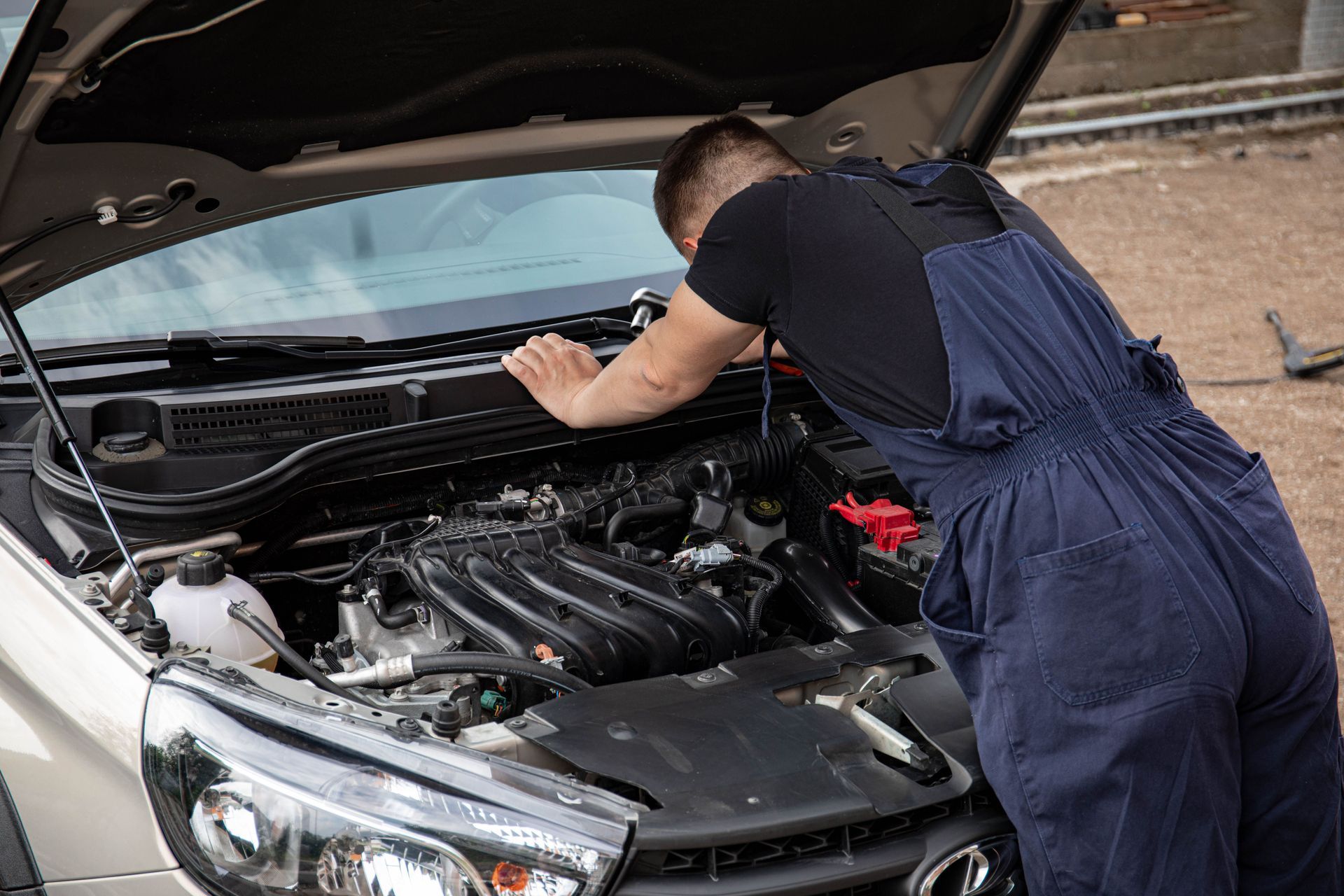
technician inspecting car air conditioning system at AutoWits Scottsdale auto repair shop
By Alexander Jones April 30, 2026
Weak airflow, warm vents, weird smells? Six signs your car's AC needs attention before Arizona summer hits. AutoWits Scottsdale free inspections — call today!
mechanic checking wheel alignment on a vehicle at AutoWits Auto Repair in Scottsdale Arizona
By Alexander Jones April 29, 2026
Tires wearing unevenly? Steering pulling to one side? Learn the top signs your car needs a wheel alignment. Free inspection at AutoWits Scottsdale — call today.
By Autowits Service April 26, 2026
Discover expert tire services at AutoWits Auto Repair in Scottsdale, AZ. Ensure safety with our quality tire replacements. Schedule an appointment today!
mechanic inspecting brake rotor and caliper during brake service at AutoWits Scottsdale
By Alexander Jones April 23, 2026
Hear a squeal, grind, or soft pedal? Learn the top brake warning signs every Scottsdale driver should watch for — book a free inspection at AutoWits today.
By Alexander Jones April 21, 2026
You're cruising down the Loop 101 when that little amber glow flickers onto your dashboard. Suddenly every sound, every shift, every bump feels suspicious. Is it serious? Can you keep driving? Should you pull over right now? The check engine light is one of the most misunderstood warnings on your vehicle, and for good reason — it can mean something as small as a loose gas cap or something as serious as a failing catalytic converter. What it never means is "nothing." At AutoWits Auto Repair in Scottsdale, we see drivers every week who waited too long to have that light diagnosed, and what could have been a $150 fix turned into a $2,000 repair. Here's what the light is really trying to tell you, and why getting it looked at sooner rather than later is almost always the smart move. Why the Check Engine Light Should Never Be Ignored The check engine light, officially called the malfunction indicator lamp, is wired into your vehicle's onboard diagnostic system. When it turns on, a sensor somewhere in your engine, emissions system, or transmission has detected that something is operating outside its normal range. That sensor isn't guessing — it's measuring. Ignoring the warning lets small issues spiral into big ones. A faulty oxygen sensor, left alone, causes your engine to run rich or lean, burn more fuel, and eventually damage the catalytic converter — one of the costliest parts on your vehicle. Plenty of drivers in Mesa and Tempe figure they'll "get to it later," only to walk into a much larger repair bill a few weeks down the road. A prompt check engine light diagnostic catches the problem before it starts breaking other things. Common Reasons Your Check Engine Light Comes On There are thousands of potential trigger codes, but a handful of causes account for most of the check engine lights we see at our shop. Loose or damaged gas caps top the list, especially after a fill-up. Faulty oxygen sensors are another big one — they hurt fuel economy long before you'd notice at the pump. Worn spark plugs and failing ignition coils cause misfires that trip the light. Mass airflow sensor trouble leads to rough idle and poor acceleration. EVAP system leaks show up often in the Phoenix area, where desert heat ages rubber seals faster than cooler climates. The right fix always depends on the right diagnosis, and that's where professional tools and pattern recognition matter. Our tune-up service often catches and corrects the small issues that set off that warning in the first place. Steady vs. Flashing: What the Light Is Really Telling You Not every check engine light means the same thing, and understanding the difference can save your engine. A steady, solid check engine light means something is wrong but it isn't an immediate emergency. You can typically drive to your mechanic safely — but you shouldn't put it off. Drive gently, skip the heavy loads, and schedule a visit within a day or two. A flashing check engine light is a completely different story. A flashing light almost always indicates an active misfire, which dumps unburned fuel into your exhaust and can destroy your catalytic converter in a matter of miles. If your light is flashing, pull over somewhere safe, reduce engine load, and call us at 480-616-1100. Don't try to power through on your way home from Paradise Valley or Chandler — the drive home could cost you thousands in added damage. Why DIY Code Readers Only Tell Half the Story You've probably seen the inexpensive OBD-II code readers at auto parts stores — plug it in, pull the code, done. The problem is that the code is a symptom, not a diagnosis. Take a P0420 code, one of the most common. It points to catalytic converter efficiency, so the easy assumption is "replace the cat." But the actual root cause is often a failing oxygen sensor, a small exhaust leak, or an engine running rich for another reason entirely. Replace the converter without fixing the underlying issue and the new one will fail too — you'll be back in the shop and out another $1,500 or more. Professional diagnostics go far beyond reading the code. At our shop we combine code data with live sensor readings, smoke testing for leaks, targeted component testing, and years of pattern recognition from working on thousands of vehicles across the East Valley. That's how a small issue stays a small issue. What a Professional Diagnostic at AutoWits Actually Looks Like When you bring your vehicle in for a check engine light, here's what happens. First, we perform a full scan of every module — not just the engine, but transmission, ABS, airbag, and body systems — because sometimes a stored code in one module points to the real cause of another. Next, we review live data, watching sensors in real time to catch intermittent faults that disappear when the car sits still. Then comes a visual inspection: loose connectors, damaged wiring, vacuum leaks, obvious wear. From there we move to targeted testing — pinpointing the exact failing component instead of guessing and throwing parts at the problem. Finally, you get a written estimate laying out what needs to be fixed, what it will cost, and what can wait. We also include a free vehicle inspection when you come in for diagnostics, so you'll know about any other issues developing — ideally before they trigger their own warning lights. Catching Problems Early Saves You Real Money Here's the math that matters. A diagnostic visit is a small fee. Catching a failing sensor, ignition coil, or vacuum leak early can prevent damage to your catalytic converter ($1,200–$2,500), your engine ($3,000+), or your transmission ($2,500 and up). We see it constantly at the shop — a driver from the East Valley comes in with a flashing light they've been ignoring for three weeks, and what should have been a $200 coil pack is now a full catalytic converter replacement. The check engine light isn't your enemy. It's your car trying to save you money. Pair diagnostics with routine service like a timely oil change or electrical system check to head off wear-and-tear issues before they ever light up your dashboard. A check engine light is your vehicle asking for help. Don't guess, and don't ignore it — get it diagnosed by a shop that will give you a straight answer and a fair price. Bring your car into AutoWits for a free vehicle inspection and transparent diagnostics from technicians who care about your car and your wallet. Plus, check out our current specials and promotions to save even more on your visit. Call us at 480-616-1100 or schedule online today. We proudly serve Scottsdale, Mesa, Tempe, Paradise Valley, Chandler, and the greater Phoenix area — and we'd love to help you get that light off your dashboard for good.
ASE-certified technician testing a car battery during a free inspection at AutoWits Scottsdale
By Alexander Jones April 18, 2026
Spot a dying car battery before it leaves you stranded. See the top warning signs and get a free battery check at AutoWits Scottsdale. Call (480) 616-1100.
mechanic inspecting engine belts and hoses during vehicle service at AutoWits Scottsdale
By Alexander Jones April 14, 2026
Worn belts and hoses can leave you stranded in Arizona heat. Learn the warning signs and when to get them replaced. Free inspections at AutoWits Scottsdale.
Mechanic performing coolant flush and cooling system service on vehicle engine at AutoWits Auto Repa
By Alexander Jones April 9, 2026
Learn why coolant flushes are critical for Arizona drivers. AutoWits in Scottsdale explains the warning signs and how to protect your engine. Free inspections!
By Alexander Jones April 7, 2026
Get your car ready for spring with these 5 essential maintenance tips from AutoWits Auto Repair. From tire checks to AC inspections, keep your vehicle safe.
AutoWits Auto Repair mechanic performing spring vehicle tune-up service in Scottsdale AZ
By Alexander Jones April 2, 2026
Is your vehicle ready for Scottsdale's summer heat? AutoWits Auto Repair offers expert spring tune-up services for Valley drivers. Call today and schedule now!
More Posts