Signs Your Brakes Need Service: A Scottsdale Driver's Guide

Alexander Jones • April 23, 2026

Catch brake issues early before they turn into costly repairs.
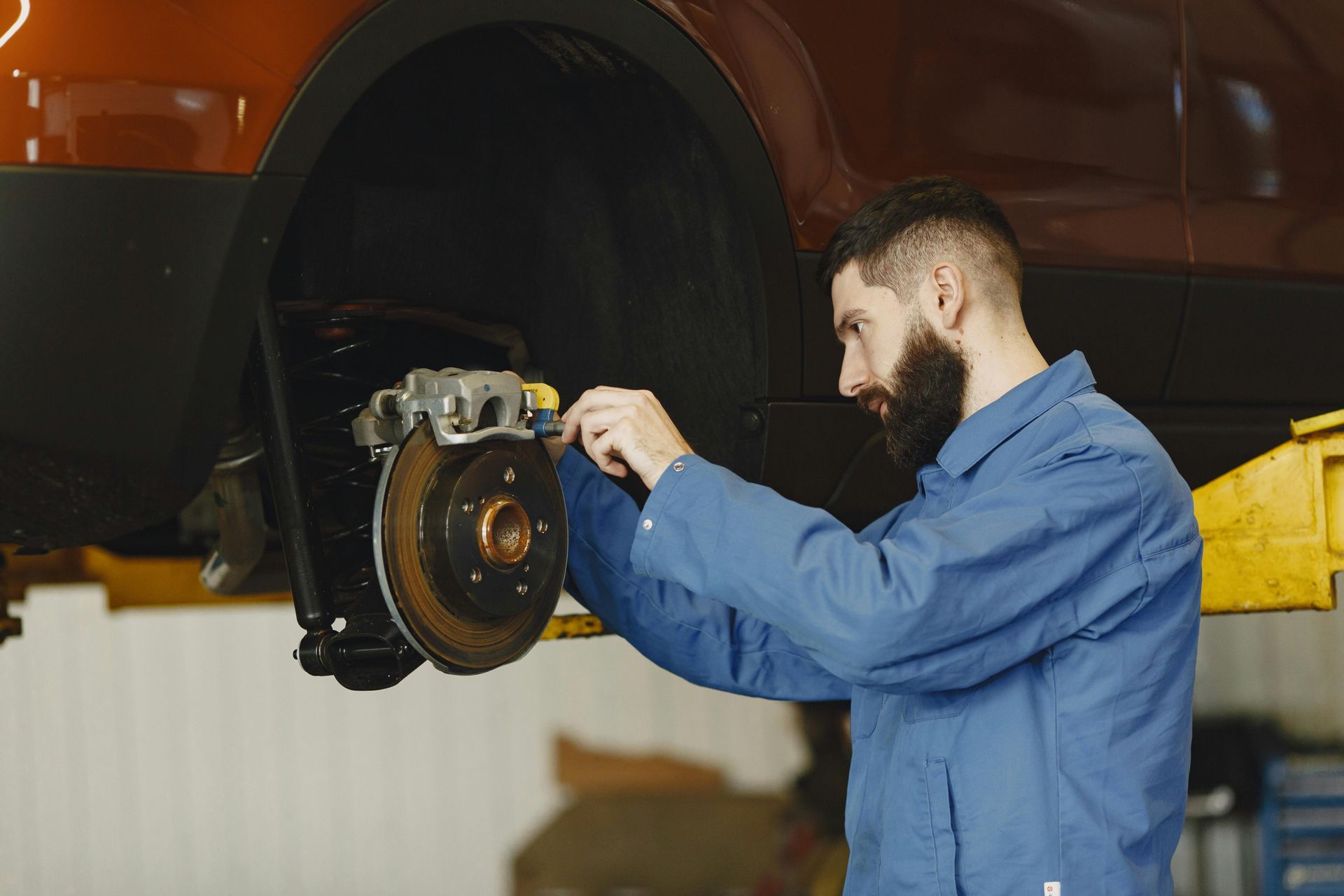
mechanic inspecting brake rotor and caliper during service at AutoWits Scottsdale
You're pulling up to a red light at the intersection of Shea and Scottsdale Road when you hear it — a faint squeal, or maybe a grinding scrape, each time you press the pedal. You pause and wonder: is that normal? Is it bad? How much longer can I put this off?

Brakes are the most important safety system on your vehicle, and they rarely fail without warning. The catch is that those warnings are easy to ignore, especially when you're busy and the car still seems to stop okay. At AutoWits Auto Repair in Scottsdale, we see drivers every week who waited just a little too long — turning a routine pad replacement into a rotor, caliper, or even a hub repair. Here's what to watch for, and why acting early always costs less.

Why Brake Maintenance Matters More in Arizona

Arizona is tough on brakes. The Valley's combination of heavy stop-and-go traffic on the Loop 101, relentless summer heat, and fine desert grit creates a perfect storm for brake wear. High temperatures accelerate the breakdown of brake fluid, which absorbs moisture and loses its boiling point over time — meaning your pedal can feel soft or spongy when you need it most. Dust and sand work their way between pads and rotors, grinding down surfaces faster than they would in milder climates.

If you live in Mesa, Tempe, or Paradise Valley and do a lot of city driving, your brakes are working harder than a Midwest driver's would in the same vehicle. That's not a reason to panic — it's a reason to stay ahead of wear with regular brake repair service and a free inspection the moment something feels off.

Top Warning Signs Your Brakes Need Attention

Most brake problems announce themselves early if you know what to listen and feel for. A high-pitched squeal when you apply the brakes usually means your pad wear indicators are scraping the rotor — a built-in audible warning that it's time for new pads. A deeper grinding sound means the pads are already worn through, and metal is contacting metal. That's when routine maintenance becomes expensive repair.

You should also pay attention to how your pedal feels. A soft or mushy pedal can point to air or moisture in the brake lines. A pulsing pedal during stops often means warped rotors. If your car pulls to one side when braking, a caliper may be sticking. And if you spot the brake warning light on your dashboard, don't wait — pair brake attention with a check engine light diagnostic so nothing else slips by.

How Your Brake System Actually Works

Understanding the basics helps you recognize when something's off. When you press the pedal, hydraulic pressure travels through your brake lines to the calipers at each wheel. The calipers squeeze brake pads against spinning rotors, and the resulting friction slows your vehicle. Simple in concept — but every component in that chain has to be in good condition for the system to work correctly.

Pads wear down with every stop. Rotors, which absorb enormous heat during braking, can warp or develop grooves. Calipers can seize, stop retracting properly, and cause uneven wear or dragging. Brake fluid absorbs moisture from the air, reducing its effectiveness. And hoses and lines can crack under Arizona's relentless heat. That's why a complete brake inspection looks at every part of the system — not just the pads.

What Causes Brakes to Wear Faster in the Valley

Some wear is normal, but a handful of habits and conditions speed it up. Heavy city driving is the biggest factor — the more often you stop, the faster your pads and rotors wear. Towing a trailer, hauling extra weight, or driving aggressively (braking hard instead of coasting) puts additional heat and stress on the entire system.

Environmental factors matter too. The Loop 101 corridor and the East Valley see a lot of high-speed stop-and-go, and Arizona's summer road temperatures can exceed 160 degrees on pavement. That heat works its way into your rotors, calipers, and fluid. Skipping routine maintenance also shortens brake life — worn pads left unaddressed chew into rotors, and neglected brake fluid lets moisture corrode internal components. Pair brake service with regular tire service and alignment checks, because uneven tires force brakes to work unevenly too.

What a Professional Brake Inspection Includes

When you bring your car into AutoWits, a brake inspection is more than a quick look. Our technicians measure remaining pad thickness to the millimeter, check rotor thickness and surface condition, inspect calipers for proper movement and leaks, examine brake lines and hoses for cracks or corrosion, and test brake fluid for moisture content and contamination. We also look at hardware like clips and slide pins that are often overlooked — a sticking slide pin can wear a brand-new set of pads in just a few thousand miles.

You'll get a clear written report showing what's worn, what's fine, and what's coming due. If repairs are needed, we explain what's safety-critical and what can wait. Every visit also includes a free vehicle inspection so you know about any other developing issues across your entire car, not just the brakes.

Why Waiting Costs More Than You Think

Brake repairs are dramatically cheaper when they're caught early. Replacing worn pads is a routine service. Waiting until the pads are metal-on-metal means replacing rotors too — sometimes doubling or tripling the cost. Ignoring a sticking caliper can ruin a new set of pads within a few thousand miles. And brake fluid that's gone too long without service can damage ABS modules and master cylinders, which are far pricier than a simple flush.

Beyond the cost, there's the safety piece. Reduced stopping power in Phoenix summer traffic isn't something to gamble with. The good news is you don't have to guess whether your brakes need attention — a quick stop at the shop and a proper inspection will tell you exactly where you stand. Check our current coupons and specials for extra savings on brake service when it's time.

Brakes wear in predictable patterns, but only if someone is paying attention. If you've heard any of the warnings above — a squeal, a grind, a soft pedal, a pull — don't wait for things to get worse. Bring your car into AutoWits for a free brake inspection and an honest, transparent assessment from technicians who care about your safety and your budget. Plus, check out our current promotions for seasonal savings on service across the board. Call us at (480) 771-6144 or schedule online today.

We proudly serve Scottsdale, Mesa, Tempe, Paradise Valley, Chandler, and the greater Phoenix area — and we'd love to help you stop with confidence every time.
By Alexander Jones April 21, 2026
You're cruising down the Loop 101 when that little amber glow flickers onto your dashboard. Suddenly every sound, every shift, every bump feels suspicious. Is it serious? Can you keep driving? Should you pull over right now? The check engine light is one of the most misunderstood warnings on your vehicle, and for good reason — it can mean something as small as a loose gas cap or something as serious as a failing catalytic converter. What it never means is "nothing." At AutoWits Auto Repair in Scottsdale, we see drivers every week who waited too long to have that light diagnosed, and what could have been a $150 fix turned into a $2,000 repair. Here's what the light is really trying to tell you, and why getting it looked at sooner rather than later is almost always the smart move. Why the Check Engine Light Should Never Be Ignored The check engine light, officially called the malfunction indicator lamp, is wired into your vehicle's onboard diagnostic system. When it turns on, a sensor somewhere in your engine, emissions system, or transmission has detected that something is operating outside its normal range. That sensor isn't guessing — it's measuring. Ignoring the warning lets small issues spiral into big ones. A faulty oxygen sensor, left alone, causes your engine to run rich or lean, burn more fuel, and eventually damage the catalytic converter — one of the costliest parts on your vehicle. Plenty of drivers in Mesa and Tempe figure they'll "get to it later," only to walk into a much larger repair bill a few weeks down the road. A prompt check engine light diagnostic catches the problem before it starts breaking other things. Common Reasons Your Check Engine Light Comes On There are thousands of potential trigger codes, but a handful of causes account for most of the check engine lights we see at our shop. Loose or damaged gas caps top the list, especially after a fill-up. Faulty oxygen sensors are another big one — they hurt fuel economy long before you'd notice at the pump. Worn spark plugs and failing ignition coils cause misfires that trip the light. Mass airflow sensor trouble leads to rough idle and poor acceleration. EVAP system leaks show up often in the Phoenix area, where desert heat ages rubber seals faster than cooler climates. The right fix always depends on the right diagnosis, and that's where professional tools and pattern recognition matter. Our tune-up service often catches and corrects the small issues that set off that warning in the first place. Steady vs. Flashing: What the Light Is Really Telling You Not every check engine light means the same thing, and understanding the difference can save your engine. A steady, solid check engine light means something is wrong but it isn't an immediate emergency. You can typically drive to your mechanic safely — but you shouldn't put it off. Drive gently, skip the heavy loads, and schedule a visit within a day or two. A flashing check engine light is a completely different story. A flashing light almost always indicates an active misfire, which dumps unburned fuel into your exhaust and can destroy your catalytic converter in a matter of miles. If your light is flashing, pull over somewhere safe, reduce engine load, and call us at 480-616-1100. Don't try to power through on your way home from Paradise Valley or Chandler — the drive home could cost you thousands in added damage. Why DIY Code Readers Only Tell Half the Story You've probably seen the inexpensive OBD-II code readers at auto parts stores — plug it in, pull the code, done. The problem is that the code is a symptom, not a diagnosis. Take a P0420 code, one of the most common. It points to catalytic converter efficiency, so the easy assumption is "replace the cat." But the actual root cause is often a failing oxygen sensor, a small exhaust leak, or an engine running rich for another reason entirely. Replace the converter without fixing the underlying issue and the new one will fail too — you'll be back in the shop and out another $1,500 or more. Professional diagnostics go far beyond reading the code. At our shop we combine code data with live sensor readings, smoke testing for leaks, targeted component testing, and years of pattern recognition from working on thousands of vehicles across the East Valley. That's how a small issue stays a small issue. What a Professional Diagnostic at AutoWits Actually Looks Like When you bring your vehicle in for a check engine light, here's what happens. First, we perform a full scan of every module — not just the engine, but transmission, ABS, airbag, and body systems — because sometimes a stored code in one module points to the real cause of another. Next, we review live data, watching sensors in real time to catch intermittent faults that disappear when the car sits still. Then comes a visual inspection: loose connectors, damaged wiring, vacuum leaks, obvious wear. From there we move to targeted testing — pinpointing the exact failing component instead of guessing and throwing parts at the problem. Finally, you get a written estimate laying out what needs to be fixed, what it will cost, and what can wait. We also include a free vehicle inspection when you come in for diagnostics, so you'll know about any other issues developing — ideally before they trigger their own warning lights. Catching Problems Early Saves You Real Money Here's the math that matters. A diagnostic visit is a small fee. Catching a failing sensor, ignition coil, or vacuum leak early can prevent damage to your catalytic converter ($1,200–$2,500), your engine ($3,000+), or your transmission ($2,500 and up). We see it constantly at the shop — a driver from the East Valley comes in with a flashing light they've been ignoring for three weeks, and what should have been a $200 coil pack is now a full catalytic converter replacement. The check engine light isn't your enemy. It's your car trying to save you money. Pair diagnostics with routine service like a timely oil change or electrical system check to head off wear-and-tear issues before they ever light up your dashboard. A check engine light is your vehicle asking for help. Don't guess, and don't ignore it — get it diagnosed by a shop that will give you a straight answer and a fair price. Bring your car into AutoWits for a free vehicle inspection and transparent diagnostics from technicians who care about your car and your wallet. Plus, check out our current specials and promotions to save even more on your visit. Call us at 480-616-1100 or schedule online today. We proudly serve Scottsdale, Mesa, Tempe, Paradise Valley, Chandler, and the greater Phoenix area — and we'd love to help you get that light off your dashboard for good.
ASE-certified technician testing a car battery during a free inspection at AutoWits Scottsdale
By Alexander Jones April 18, 2026
Spot a dying car battery before it leaves you stranded. See the top warning signs and get a free battery check at AutoWits Scottsdale. Call (480) 616-1100.
mechanic inspecting engine belts and hoses during vehicle service at AutoWits Scottsdale
By Alexander Jones April 14, 2026
Worn belts and hoses can leave you stranded in Arizona heat. Learn the warning signs and when to get them replaced. Free inspections at AutoWits Scottsdale.

Mechanic performing coolant flush and cooling system service on vehicle engine at AutoWits Auto Repa
By Alexander Jones April 9, 2026
Learn why coolant flushes are critical for Arizona drivers. AutoWits in Scottsdale explains the warning signs and how to protect your engine. Free inspections!
By Alexander Jones April 7, 2026
Get your car ready for spring with these 5 essential maintenance tips from AutoWits Auto Repair. From tire checks to AC inspections, keep your vehicle safe.
AutoWits Auto Repair mechanic performing spring vehicle tune-up service in Scottsdale AZ
By Alexander Jones April 2, 2026
Is your vehicle ready for Scottsdale's summer heat? AutoWits Auto Repair offers expert spring tune-up services for Valley drivers. Call today and schedule now!
Mechanic inspecting car engine during spring maintenance at AutoWits Auto Repair in Scottsdale, Arizona — A/C, cooling system, battery, belts, and fluid checks
By Alexander Jones March 31, 2026
Prepare your car for Arizona summer with this spring maintenance checklist from AutoWits in Scottsdale, AZ. A/C, cooling system, battery, belts & more. Book today!
By Autowits Service March 29, 2026
Discover expert oil change services at AutoWits Auto Repair in Scottsdale, AZ. Enhance engine performance and longevity. Schedule an online appointment now!
By Autowits Service March 2, 2026
Discover expert tire services and replacement at AutoWits in Scottsdale, AZ. Boost your car's performance today! Schedule an online appointment now.
February 17, 2026
Why is my Tesla Model 3 or Model Y Squeaking? If you drive a Tesla in Scottsdale, you’ve likely noticed a high-pitched creaking or "rubber duck" sound when turning the steering wheel or driving over speed bumps. This isn't just a minor annoyance—it is a documented failure of the Front Upper Control Arm (FUCA) ball joints, a common issue for Model 3 and Model Y vehicles. At AutoWits, we specialize in Tesla suspension restoration and out-of-warranty repairs. While the Tesla Service Center on Raintree Dr may have weeks of wait time, our technicians can often diagnose and resolve your suspension issues in a fraction of the time with higher-quality, revised components. The “Scottsdale Squeak”: Why Tesla Suspension Fails The Arizona heat and desert dust are particularly hard on Tesla’s factory suspension components. The most common culprit is the upper control arm. The factory seal on the ball joint can allow moisture and grit to enter, drying out the lubrication and causing the metal-on-metal creak that every Tesla owner dreads. Common Tesla Symptoms We Fix: The "Rubber Duck" Sound : A loud creak when turning or at low speeds. Vibration at Highway Speeds: Often related to lateral link wear or tire flat-spotting. Uneven Tire Wear: High-torque EVs go through tires quickly; if your alignment is off by even a fraction, you’re burning money. “Clunking” over Potholes: Usually indicative of worn bushings or stabilizer links. Why Choose an Independent Tesla Specialist? Many owners think they are "locked in" to the Tesla Service Center. However, for out-of-warranty repairs like suspension, brakes, and tires, an independent specialist like AutoWits offers several advantages: Transparency: We provide Digital Vehicle Inspections. We text you photos and videos of your worn control arms so you see exactly what we see. Upgraded Parts: We don't just "swap" parts. We use revised components designed to prevent future moisture intrusion, ensuring your Tesla stays quiet for the long haul. Precision Alignments: Teslas are heavy. We use specialized alignment software to ensure your vehicle is tracking perfectly, saving your expensive tires from premature wear. Frequently Asked Questions (Tesla Repair FAQ) Q: How long does a Tesla control arm replacement take? A: At AutoWits, we typically offer same-day or next-day service for control arm replacements, whereas dealership wait times can vary significantly. Q: Do you offer Tesla tire services? A: Yes. We specialize in EV-specific tires and use specialized lifting pucks to ensure your battery pack is never compromised during service.
More Posts