What's Included in a Full Vehicle Inspection?
What our technicians actually check, and why it matters in Arizona
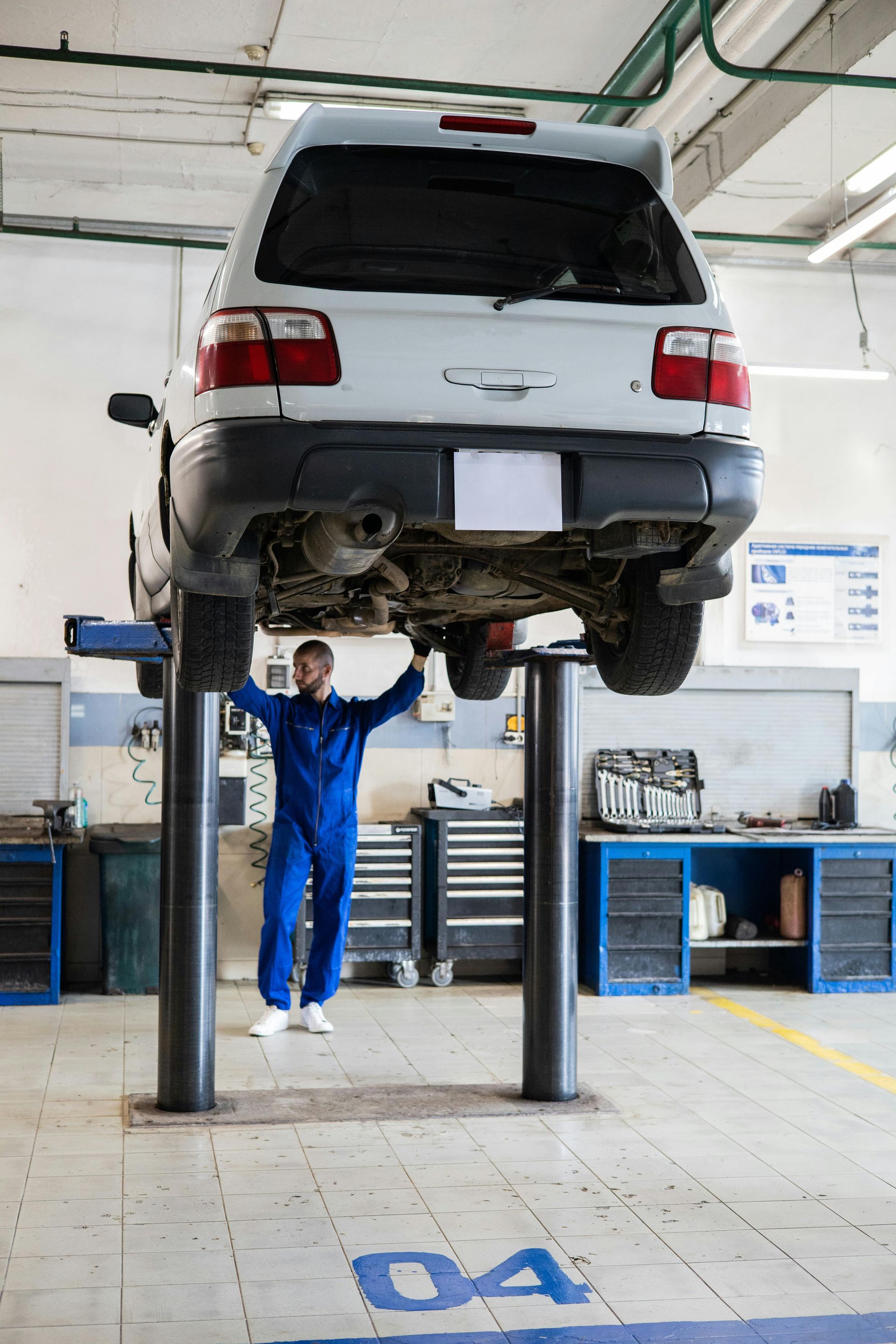
"Free inspection" is one of those phrases that can mean almost anything. At some shops it's a technician glancing at your tires on the way to the bay. At others it's a genuine head-to-toe review of your vehicle, documented with photos, that tells you exactly what shape your car is in before anything gets touched.
If you've never had a real one done, it's worth knowing what a thorough inspection actually covers — and why it's the single most useful thing you can do for a car that lives in Arizona. Heat, dust, and stop-and-go traffic on the Loop 101 age vehicles faster than the mileage on the odometer suggests.
Here's what a full vehicle inspection looks like at AutoWits, section by section.
An inspection isn't a sales pitch — it's a snapshot of where your car actually stands today.
Brakes, Tires, and Everything That Stops You
This is where a technician starts, because it's where problems carry the highest stakes. Pad thickness gets measured, rotors get checked for scoring and warping, and the technician looks for leaks anywhere in the hydraulic system. On the tires, tread depth and wear pattern matter more than age alone — uneven wear tells a story about alignment or suspension long before you feel anything through the wheel.
Arizona pavement is hard on rubber. Summer surface temperatures accelerate sidewall aging, and underinflated tires wear at the shoulders fast. A good inspection catches both, so you learn whether you need brake service now or whether your tires have another season left in them.
Fluids, Filters, and What They Reveal
Fluid levels are the easy part. What matters more is condition. Engine oil that's gone dark and thin, brake fluid that's absorbed moisture, coolant that's lost its protective additives — these all point to wear happening somewhere you can't see. Fluid is diagnostic evidence, and an experienced technician reads it that way.
Filters get the same treatment. Cabin and engine air filters clog noticeably faster here than in most of the country, thanks to dust and monsoon debris; drivers in Mesa and Chandler often need them replaced ahead of the manufacturer's interval. If your oil change is coming due, an inspection is the natural moment to find out what else is drifting out of spec.
The Cooling System and Battery
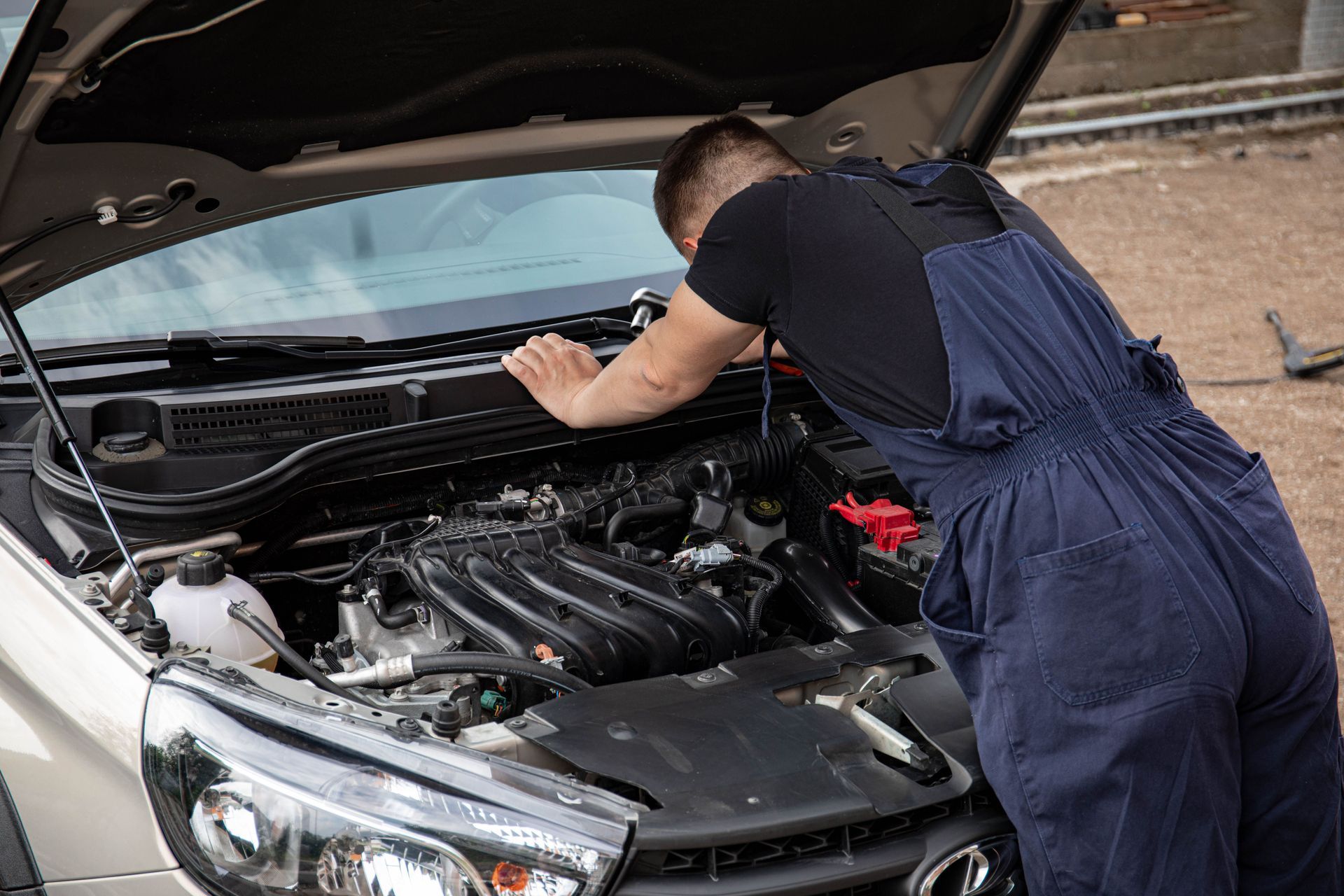
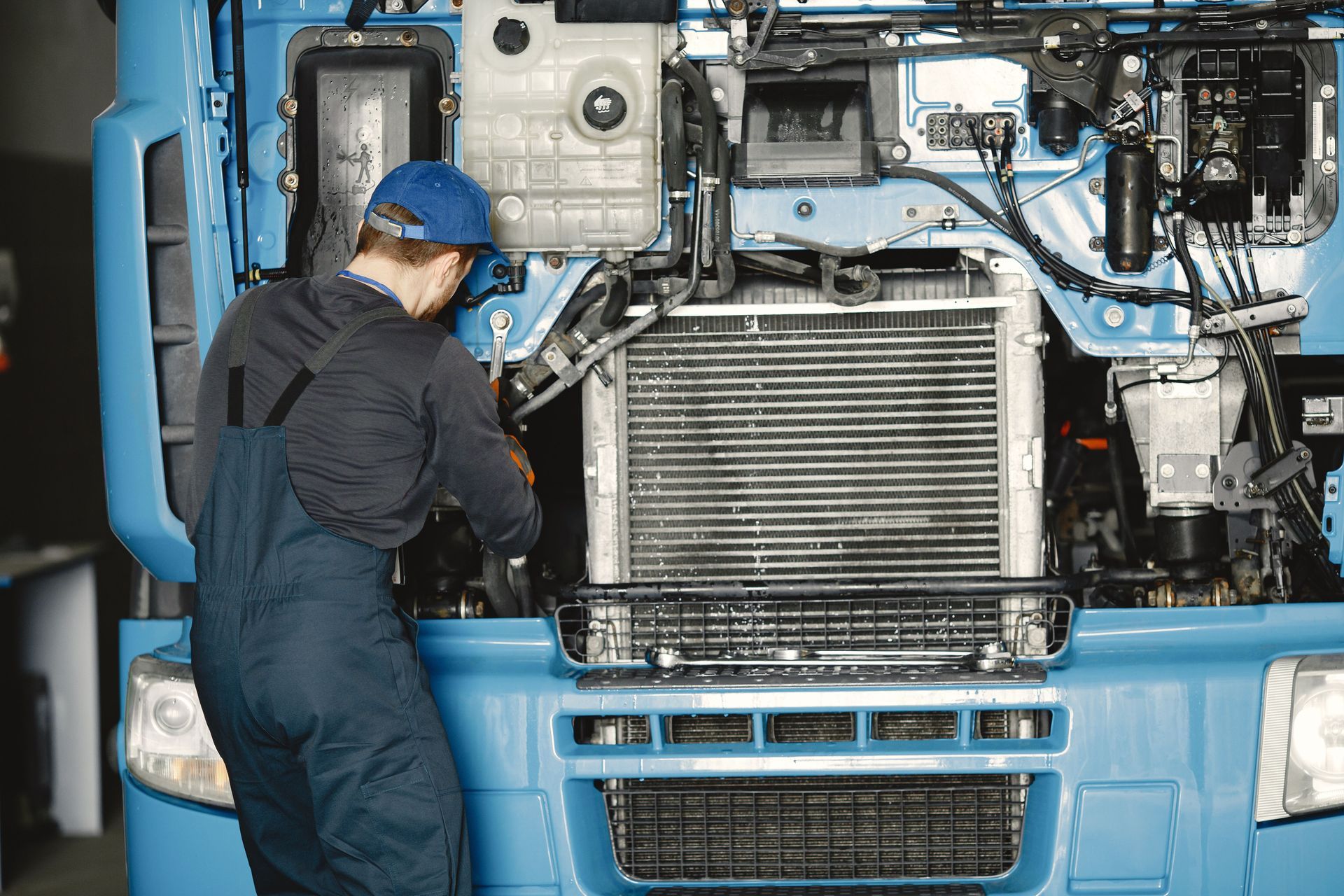
These two get extra attention in the Valley, and for good reason — they're the most common reasons a car ends up on a flatbed in July. The technician pressure-checks for leaks, inspects the radiator and hoses for soft spots, and confirms the fan and thermostat are behaving.
Batteries get load-tested rather than just voltage-checked. Arizona heat shortens battery life to roughly three years, well under the national average, and a battery can read fine at rest while failing under load. Catching a weak one during a cooling system check beats discovering it in a parking lot in Tempe. If either system is marginal, you'll hear about it before it strands you — and battery replacement is a far smaller bill than a tow plus a repair.
Steering, Suspension, and Alignment
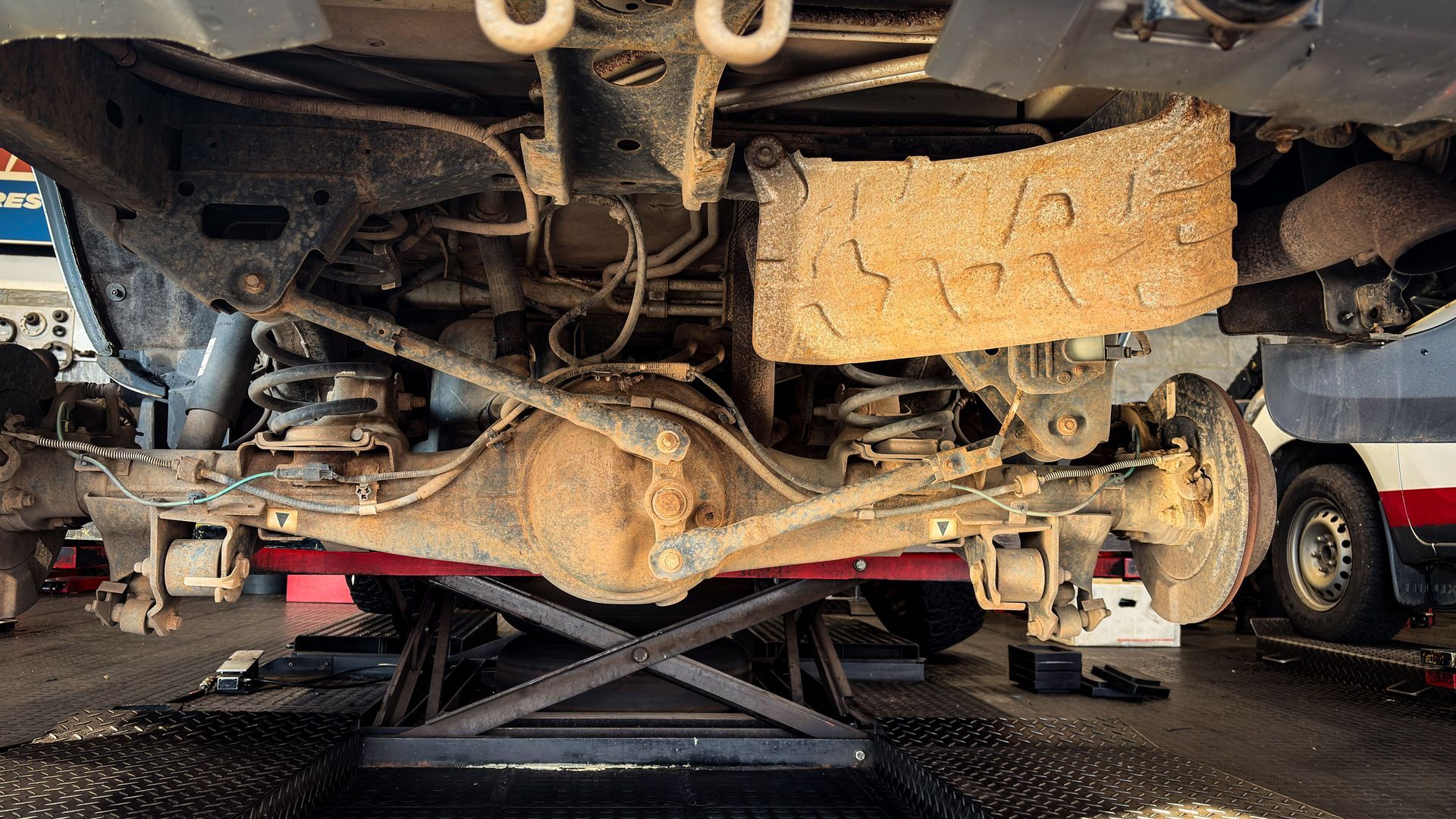
Your technician puts the vehicle on a lift and looks at the components that keep it planted: shocks and struts, control arm bushings, tie rod ends, ball joints, and CV boots. Worn parts here rarely announce themselves loudly. They show up as a slight pull, a vague feeling in the wheel, or that uneven tire wear from the first section.
Suspension wear compounds — a tired strut destroys a tire, and a bad alignment finishes the job. Getting your suspension and steering looked at while the issue is still a bushing keeps it from becoming a bushing, a tire, and an alignment all at once.
Lights, Electrical, and Warning Codes
Exterior and interior lighting gets checked, along with wipers, horn, and the visible wiring and connections under the hood. Corroded terminals and brittle insulation are common in older vehicles that have baked through a decade of Phoenix summers.
If your check engine light is on — or has been on for a while and you've learned to ignore it — the inspection includes pulling the stored codes. A code points to a system, not a specific part, which is why it's a starting point rather than an answer. Full engine diagnostics take it from there when something needs a closer look.
What You Get When It's Done
You leave with a report, not a verbal summary you half-remember. Findings are organized by urgency: what's a safety issue, what should be handled soon, and what's simply worth watching at the next visit. Photos back up the items we flag, so you can see the worn pad or the leaking hose yourself.
Nothing gets repaired without your approval, and you're never obligated to have the work done here. Plenty of customers in Scottsdale and Paradise Valley use an inspection purely for peace of mind before a road trip, or as a second opinion on a transmission estimate from somewhere else. That's a perfectly good reason to come in.
A full inspection covers:
- Brakes, rotors, and tire tread and wear pattern
- Fluid levels and condition, plus air and cabin filters
- Cooling system pressure check and battery load test
- Suspension, steering components, and alignment indicators
- Lights, wipers, visible wiring, and stored trouble codes
- A prioritized, photo-documented report you keep
Most expensive repairs start as inexpensive ones that nobody caught in time. An hour on a lift is the cheapest insurance your car will ever get.
Wondering what shape your vehicle is really in? Schedule a free vehicle inspection at AutoWits and we'll show you exactly what we find — photos included, no obligation, no pressure. Then check our current specials for savings on whatever comes next. Call 480-616-1100 to get on the schedule.